

SAN FRANCISCO · 10.15.26
Vercel’s
next chapter.
Backends. Background workers. Agents.
Seven things to know about what’s next.
Vercel is making room for the whole application: the Python backend, the worker behind the scenes, and the agent that picks up where it left off. Here’s what changed at Ship SF, why it matters, and where to start exploring.
The launch, at a glance.
SEVEN THINGS TO EXPLOREChecked October 15, 2026. Python, Daemons, Token Pass, and Drives have new launch milestones today. Connect adds Secure Compute support. The Agent Stack and eve were introduced in June; they’re the context for how the pieces come together.
Python, with a place at the table.
Your Python backend can share the same home as your frontend.
Python on Vercel is now generally available. FastAPI, Flask, and Django get automatic framework detection, with standard CPython, PyPI packages, and support for uv and pyproject.toml.
Vercel Services brings the frontend and backend into one project with shared previews, deployments, and rollbacks. Native SDKs cover models, storage, queues, and more; the AI SDK and Workflow SDK for Python remain in beta.
A small creative app with a React interface and a Python API that analyzes uploaded images.
Some work needs to keep going.
Meet Daemons: background workers that stay running between jobs.
Now in public beta, Daemons runs containerized processes that pull work from queues, databases, or other systems. You choose the instance count in each region; Vercel maintains it and restarts workers that exit or crash.
That fits Celery workers, Kafka consumers, Temporal workers, and CI runners. Launch support focuses on pull-based work, so these workers don’t need an inbound HTTP server.
A video pipeline that picks up uploads, generates thumbnails, and prepares playback files in the background.
Give your agent the right access.
Connect is the bridge to the tools and data an agent needs.
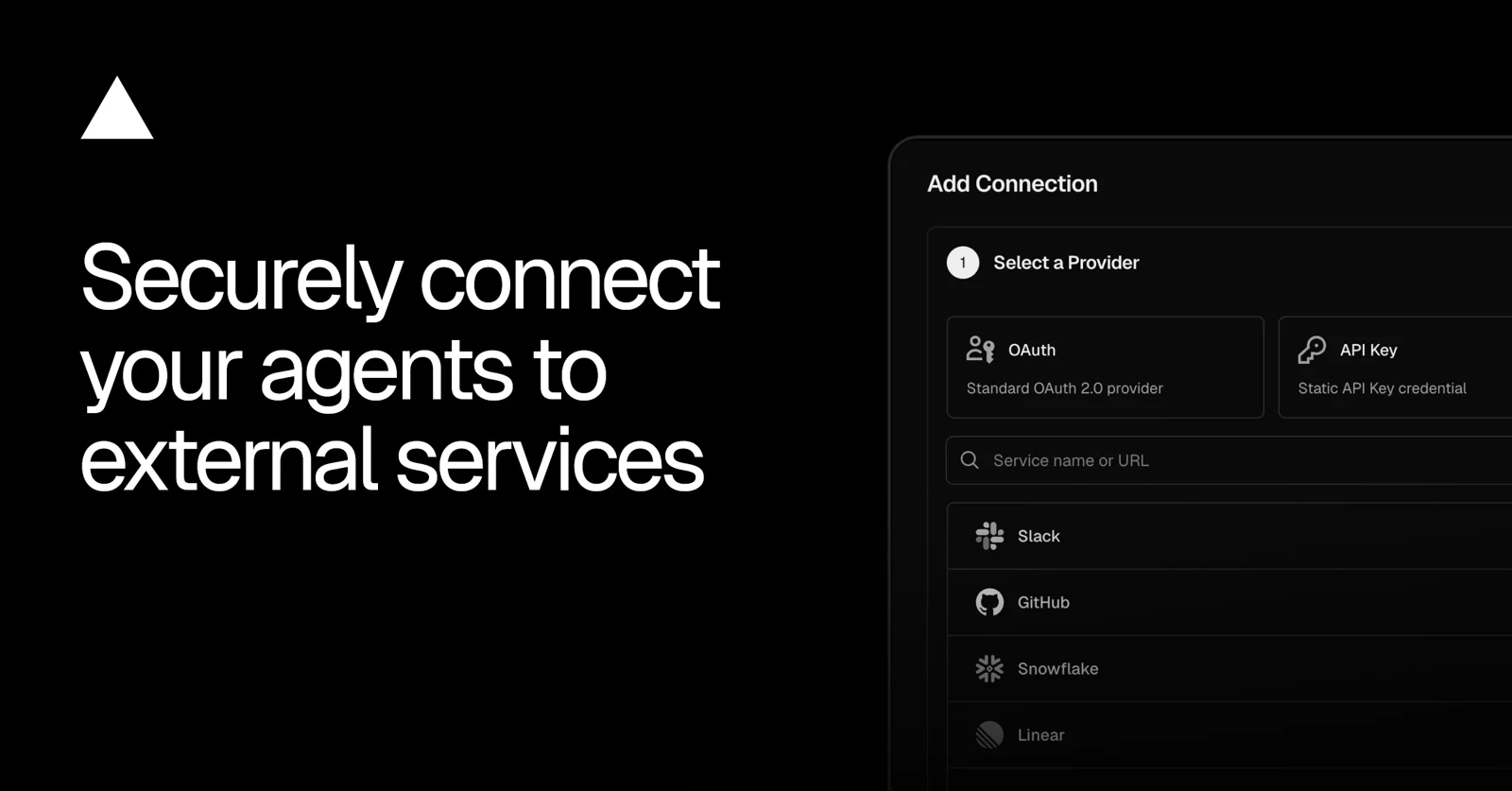
Vercel Connect handles provider credentials and OAuth flows so your app can request scoped access at runtime. It connects apps and agents to services such as Slack, GitHub, Linear, and Snowflake.
New today: Secure Compute routing lets supported connectors obtain and refresh tokens through a selected network’s dedicated IPs. That helps with providers that require an IP allowlist. Your app’s direct API traffic is unchanged by this setting.
A research assistant that reads approved project context from Linear before preparing a brief.
A little of the launch energy.
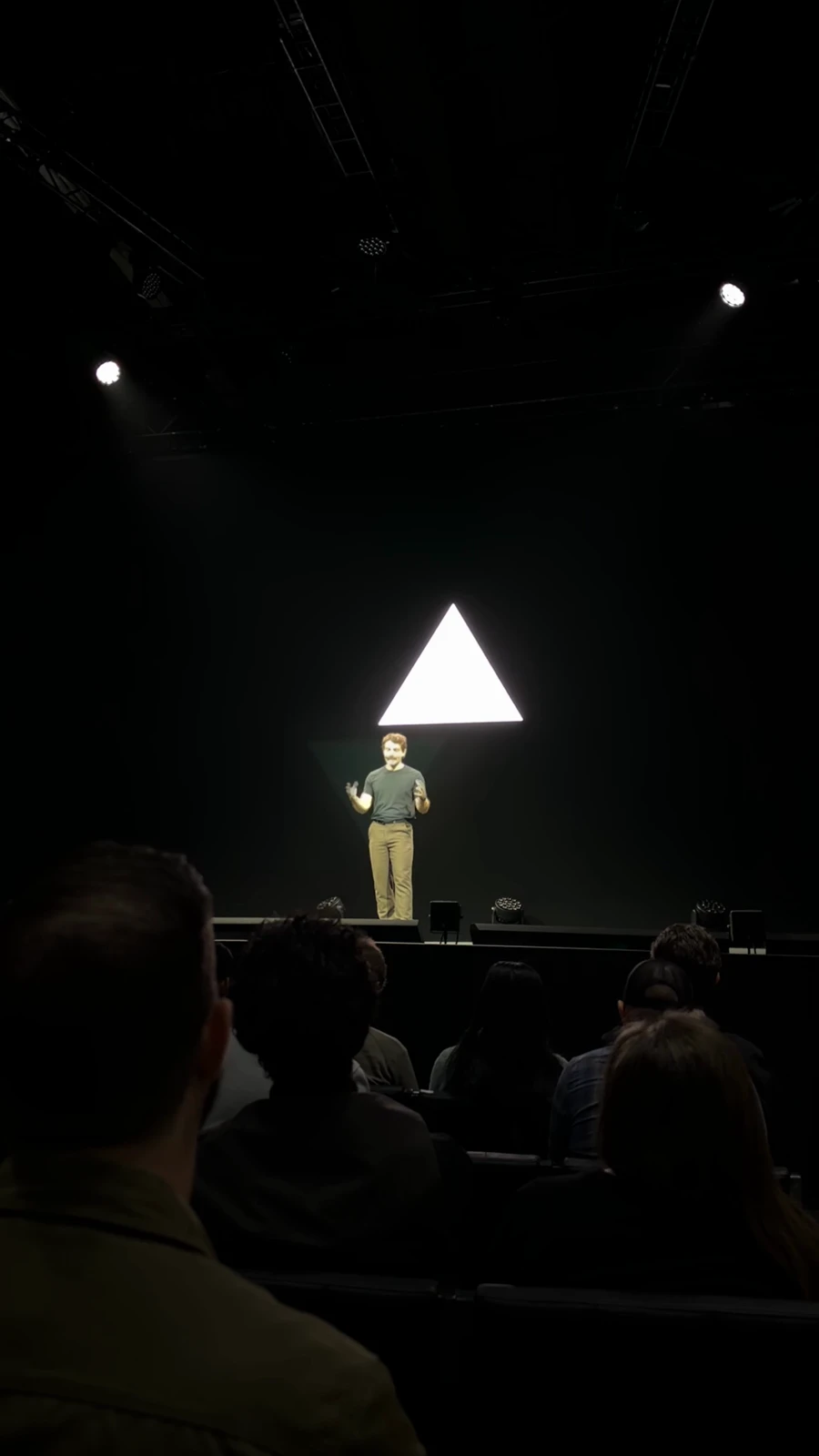
The lights, the stage, and the moment everything resolves into that familiar triangle.
An 18-second silent excerpt from the event video provided by toolandtea. Press play to watch.
DEVIN / TOOLANDTEA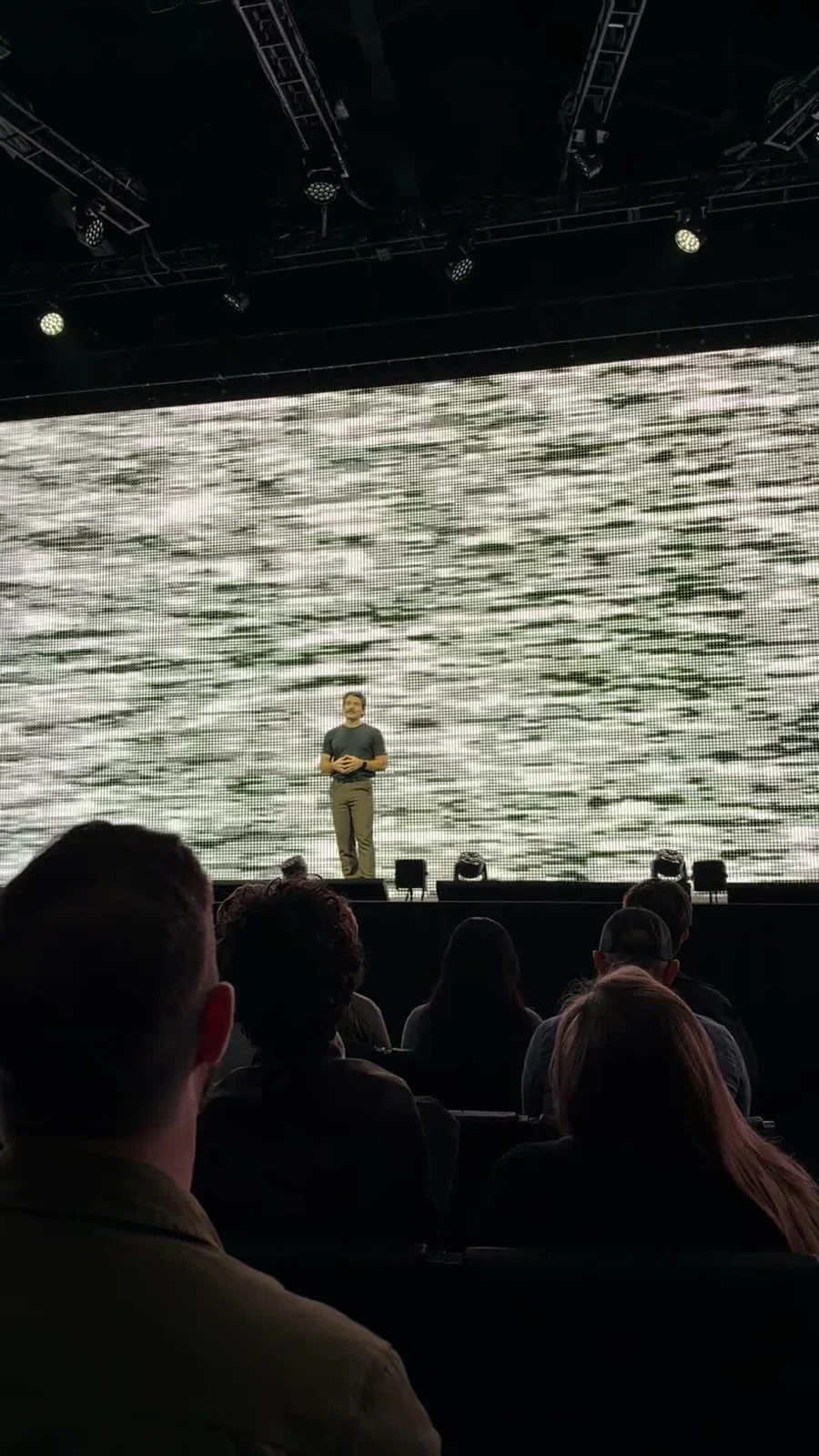
One stack. All the moving parts.
The Agent Stack is Vercel’s collection of building blocks for agents.
Introduced in June, it connects model access, durable work, isolated execution, external services, and chat delivery. You can choose the pieces your app needs, or use eve to assemble them into an agent framework.
AI SDK + AI Gateway
Call models through a common interface and route requests across providers.
Workflow + Sandbox
Resume work after interruptions and run generated code in an isolated environment.
Connect + Chat SDK
Access external services and bring the agent into the places people work.
A pass for your next coding session.
Token Pass bundles credit for a selection of models through AI Gateway.
At launch, Pro teams can join early access for $30 per month, with $80 in monthly credit for GLM 5.3 and Kimi K3. The team shares that credit across compatible coding tools or a personal agent built with the AI SDK.
Unused credit doesn’t roll over. Requests stop when it runs out, with no automatic overages. The subscription renews monthly unless canceled, and Zero Data Retention is enabled by default.
Launch terms checked October 15. This covers the included models, not every model on AI Gateway.
Check Token Pass details (opens in a new tab)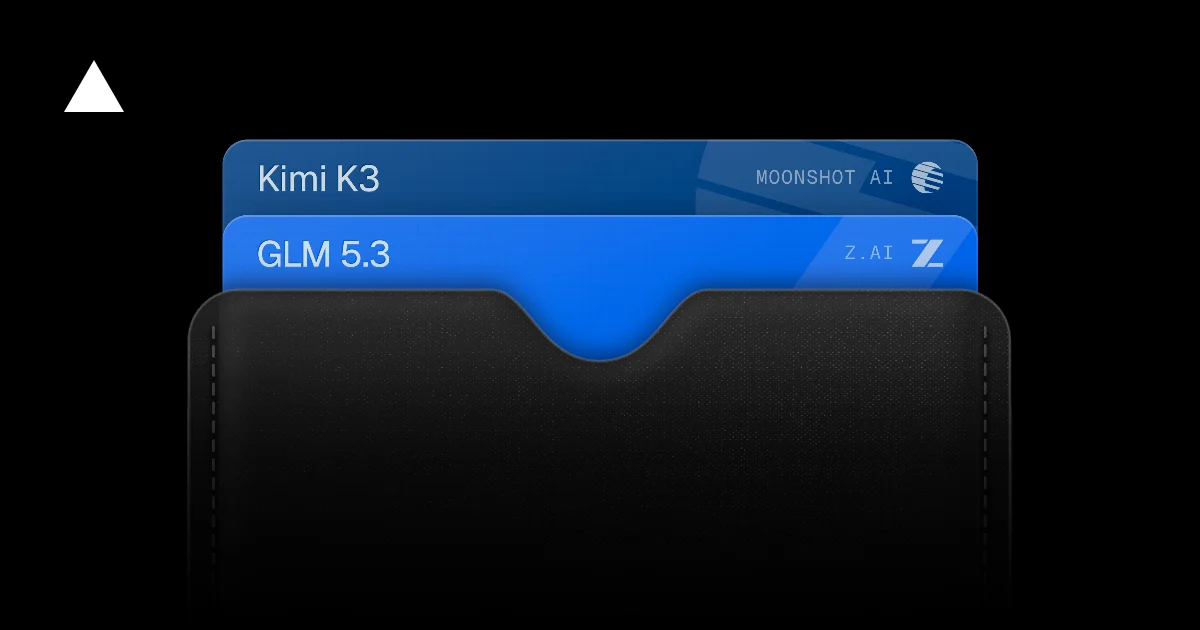
New sandbox. Same files.
Drives gives an agent a workspace that lasts beyond one run.
Vercel Drives is now generally available for Sandbox on all plans. Create a drive once, then mount it into a new sandbox when the next task needs a different environment.
Agents can reuse prepared data, mount read-only copies, or fork a drive into separate writable workspaces. Each fork can explore its own approach; forks don’t merge back into the original.
An assistant that prepares a dataset today, then opens the same files tomorrow to make a chart.
Meet eve. An agent, organized.
An open-source framework that gives the agent a structure.
Introduced June 17 and in public beta, eve brings the Agent Stack together. Instructions live in Markdown, tools in TypeScript, and the agent’s skills, channels, and schedules live alongside them in a directory.
Durable sessions, sandboxed compute, human approvals, subagents, and evals are built in. The appeal is spending more time defining the work the agent should do.
A weekly research assistant that gathers sources, drafts a report, and waits for approval before sharing it.
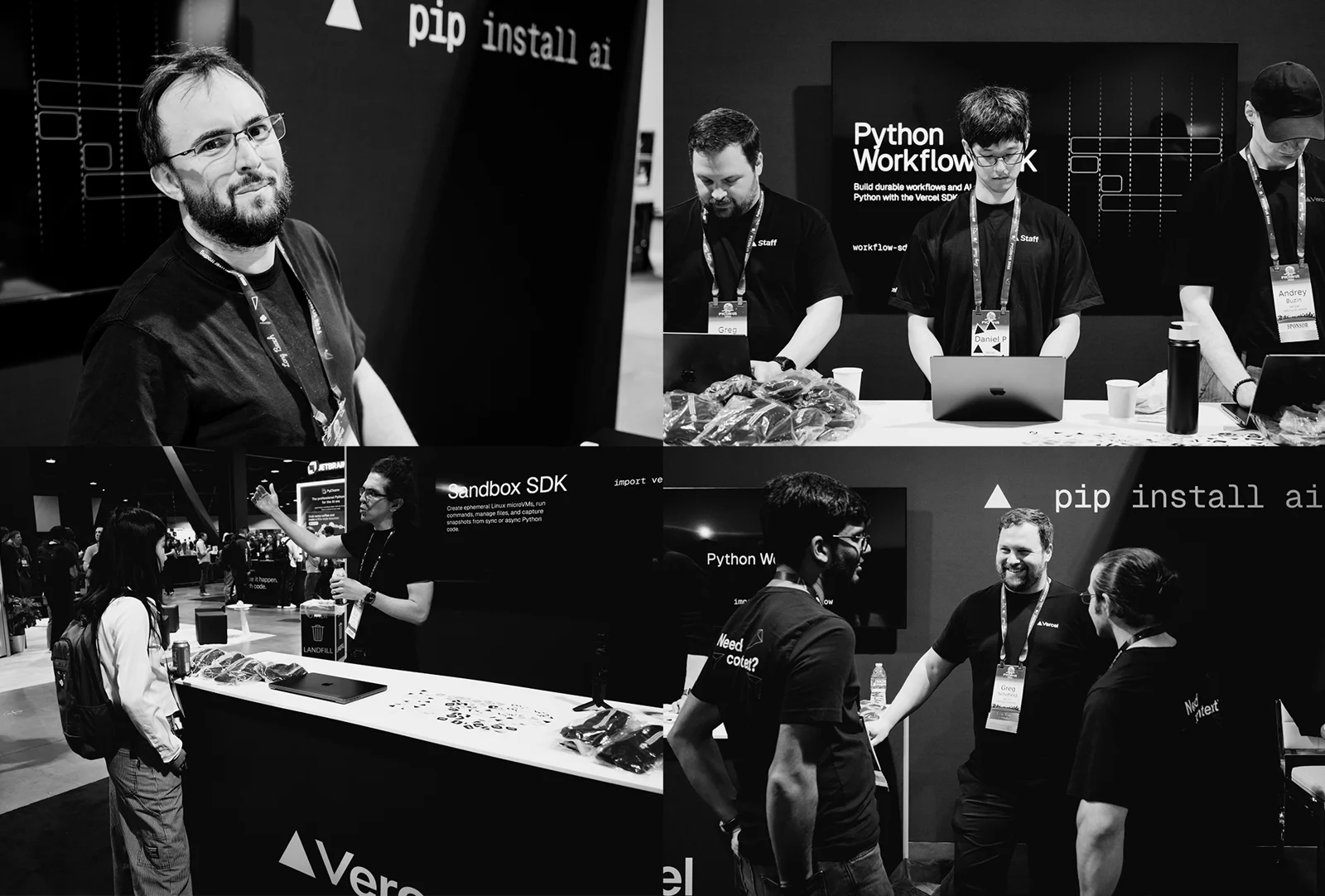
Built by people. Made for builders.
Vercel’s Python team at PyCon US 2026. An earlier moment from the year, shared in today’s Python launch story.
Photo & story: Vercel (opens in a new tab)What will you ship next?
Sources & image credits
Researched October 15, 2026 using Vercel’s own announcements. Product availability and Token Pass terms reflect that date. The building ideas above are toolandtea examples, not tested implementations.
- Python general availability · October 15 (opens in a new tab)
- Python, containers, and Daemons · October 15 (opens in a new tab)
- Daemons public beta · October 15 (opens in a new tab)
- Connect’s Secure Compute update · October 15 (opens in a new tab)
- Introducing Token Pass · October 15 (opens in a new tab)
- Drives general availability · October 15 (opens in a new tab)
- The Agent Stack · June 20 (opens in a new tab)
- Introducing eve · June 17 (opens in a new tab)
- Introducing Vercel Connect (opens in a new tab)
- Vercel Ship SF · October 15 (opens in a new tab)
Product artwork and the PyCon photo © Vercel, used here with links to their original announcements. Event stills and the silent clip were extracted from toolandtea’s supplied video. The PyCon photo is from a separate event. Independent coverage by toolandtea.
Back to the guide library